
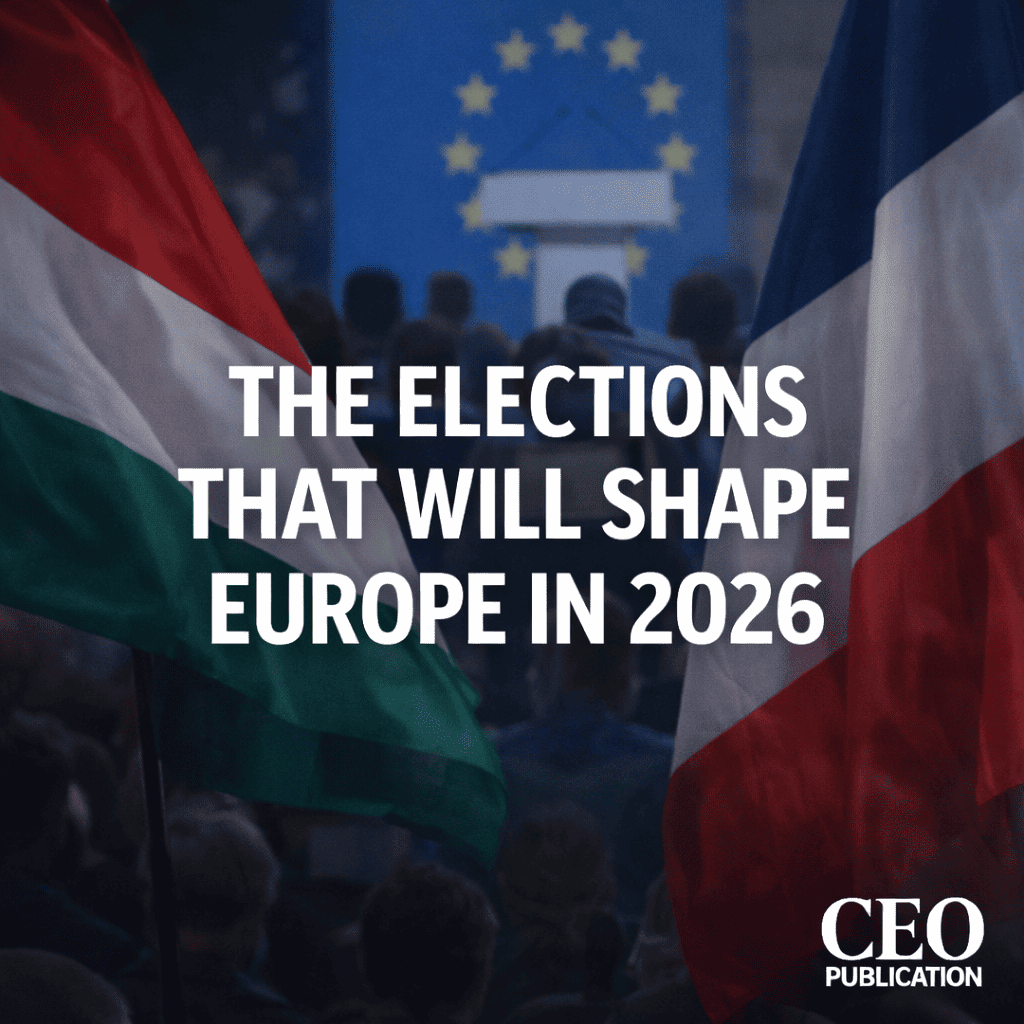
The elections that will shape Europe in 2026 are unfolding against a backdrop of prolonged war in Ukraine, rising defence spending, migration pressure, and growing scrutiny of democratic resilience across the continent. Unlike routine electoral cycles, the elections that will shape Europe in 2026 will directly influence EU cohesion, sanctions policy, budget negotiations, and the balance between national sovereignty and collective decision-making.
Hungary stands at the centre of this political map. Its parliamentary election could either extend Viktor Orbán’s long dominance or produce a leadership shift with immediate consequences for EU voting dynamics. A change in Budapest would alter internal EU calculations on Ukraine funding, Russia sanctions, and rule-of-law enforcement. For Brussels, the elections that will shape Europe in 2026 may hinge on whether Hungary remains a consistent blocker or realigns with the EU mainstream.
Western Europe will experience a quieter but equally consequential test through local and regional elections. In France, municipal elections in March will serve as a nationwide stress test for the government ahead of the 2027 presidential race, especially in cities where far-right and protest voting have gained traction. Spain’s regional contests across several autonomous communities will indicate whether national power can be sustained without reliance on ideological coalitions that strain parliamentary stability. These sub-national races reinforce the idea that the elections that will shape Europe in 2026 will be decided outside national parliaments as much as within them.
Germany’s state elections across both eastern and western regions will serve as a barometer of coalition durability and voter sentiment toward economic reform, migration management, and security policy. Strong regional results for protest parties could reshape Berlin’s negotiating posture inside the EU Council, making Germany’s internal balance a key variable in the elections that will shape Europe in 2026.
Northern Europe will vote under heightened security conditions. Sweden’s general election will take place amid persistent warnings about foreign interference, digital manipulation, and online disinformation. Election authorities are preparing for deeper scrutiny of campaign infrastructure, making Sweden a test case for Europe’s evolving election-security framework. Denmark is also heading toward a national vote before the end of 2026, with defence, Arctic policy, and domestic political fragility shaping the campaign environment.
In Eastern Europe, Bulgaria’s presidential election and likely parliamentary vote will occur as the country adopts the euro, adding economic credibility to an already volatile political scene. Latvia and Slovenia will also vote in 2026, with election technology integrity emerging as a growing concern following recent regional voting irregularities.
Taken together, the elections that will shape Europe in 2026 are less about ideology and more about governance capacity. One under-discussed solution is the standardisation of EU-wide campaign transparency tools—real-time political ad databases, cryptographic verification of digital content, and cross-party rapid response protocols against disinformation. (Speculation: these mechanisms may become de facto requirements by late 2026.)
Ultimately, the elections in 2026 that will shape Europe will determine whether the EU emerges more unified, more fragmented, or structurally adapted to permanent political volatility.