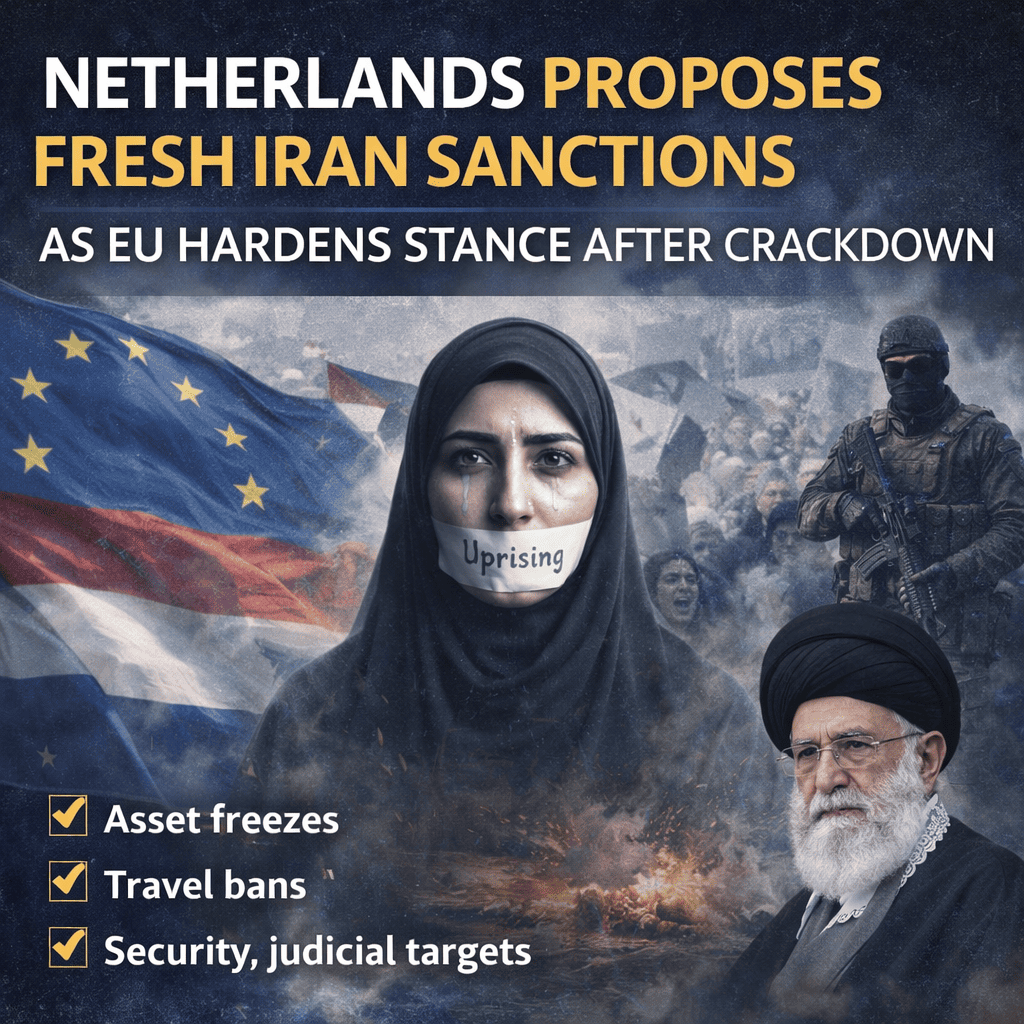
Netherlands proposes fresh Iran sanctions as European capitals move from condemnation to enforcement following Tehran’s intensified crackdown on nationwide protests. EU ambassadors are set to examine a Dutch-backed package that would expand the bloc’s existing human-rights sanctions regime against Iran, according to diplomats involved in the process.
The proposal would add new individuals to the EU blocklist, subjecting them to asset freezes and travel bans. Those targeted are expected to include figures linked to security services, judicial bodies, and administrative chains accused of enabling repression. The move builds on measures already in place and reflects a growing consensus in Brussels that public statements alone no longer carry sufficient weight.
The political tone has hardened. European Commission President Ursula von der Leyen has said the EU will move “swiftly” against those responsible for violence against demonstrators. EU foreign policy chief Kaja Kallas has echoed that stance, arguing that accountability must be visible and immediate. The Dutch initiative gives that rhetoric a concrete legal form.
Netherlands proposes fresh Iran sanctions amid disputed casualty figures and limited independent access. Rights groups and international reporting cite hundreds of deaths and thousands of arrests since protests began in late December, while Iranian authorities contest those accounts and frame the unrest as foreign-backed disorder. Internet restrictions and communication shutdowns have further obscured verification, intensifying pressure on external actors to rely on indirect evidence.
The Dutch move is part of a broader European escalation. Several EU governments have summoned Iranian ambassadors, and coordination is underway with partners outside the bloc. The United Kingdom has already announced additional measures, aligning its response with Brussels. The message across capitals is converging: repression will carry personal and financial consequences.
Yet sanctions in the EU require consensus, and the final shape of the package will depend on negotiations among member states. Lists are often refined to meet legal thresholds, balance political risk, and ensure enforceability across all jurisdictions. The debate now extends beyond who should be named to how far Europe is willing to go.
Three dynamics will shape the outcome:
- Scope of listings: whether the package focuses narrowly on operational actors or reaches higher into political command structures.
- Escalation path: whether discussions open the door to broader designations under other EU frameworks.
- Enforcement depth: how effectively measures are implemented across banking, travel, and corporate systems.
The Netherlands proposes new Iran sanctions, not as a symbolic gesture but as a test of Europe’s capacity to act in unison when norms are challenged. If adopted, the package would reinforce the EU’s line that human-rights violations are not an internal matter—and that accountability follows those who order and execute repression.
The shift is strategic. Brussels is signalling that future engagement with Tehran will be shaped not only by diplomacy but also by the costs imposed on those who cross defined red lines.