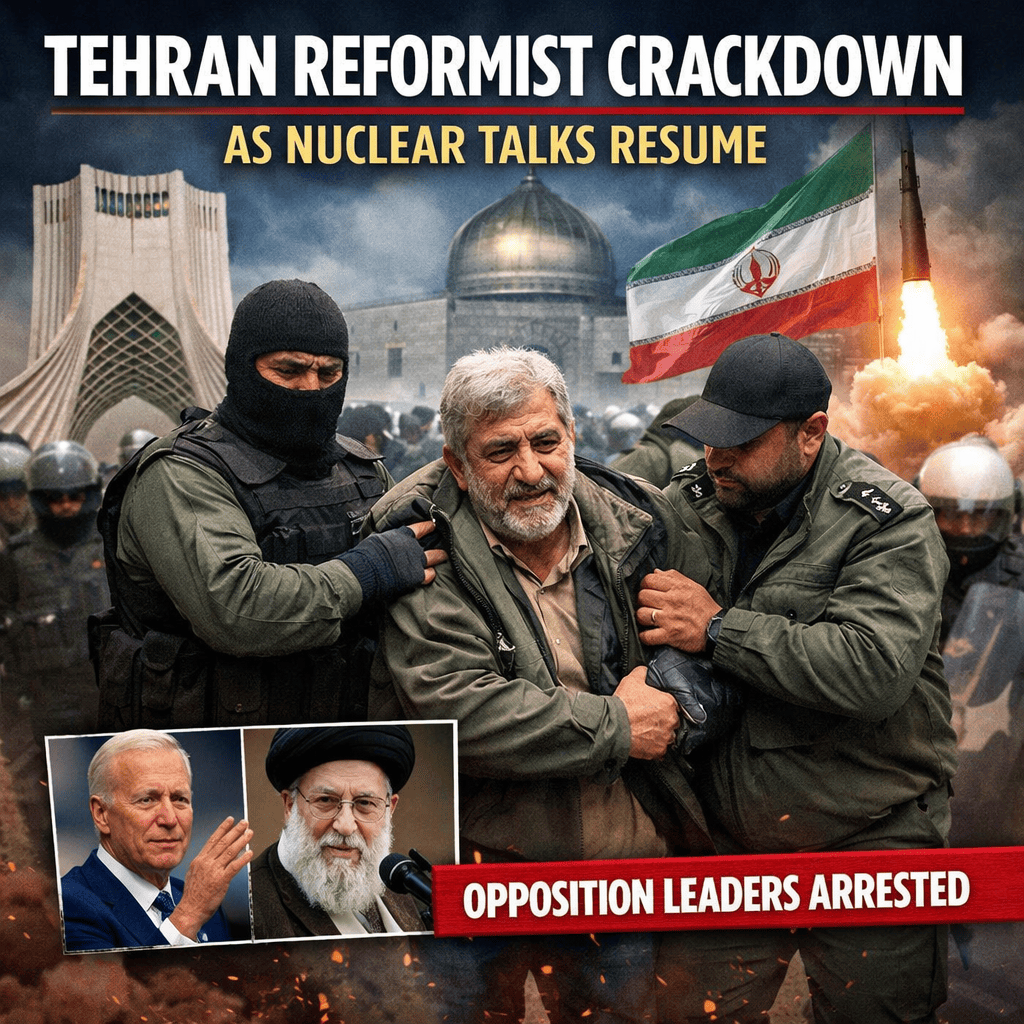
Iran’s ruling establishment has accelerated its Tehran reformist crackdown, arresting top opposition figures just as it re-engages in nuclear talks with Western powers. This wave of detentions signals a broader strategy to consolidate internal power and pre-empt any dissent during sensitive diplomatic efforts.
In recent days, several prominent reformist politicians have been detained, including Azar Mansouri, secretary-general of the Reform Front; Mohsen Aminzadeh, a former deputy foreign minister; and Ebrahim Asgharzadeh, known for his role in the 1979 U.S. embassy takeover and later shift toward democratic reform. The state has accused them of colluding with foreign entities and inciting unrest—allegations widely seen as a pretext for silencing dissent.
The Tehran reformist crackdown has expanded beyond protest organizers and journalists, now targeting long-standing insiders of the Islamic Republic who advocate for moderation. Reformist groups, once tolerated as part of Iran’s political ecosystem, are increasingly being treated as threats to national security. The recent crackdown follows last month’s sweeping suppression of street protests that erupted over economic hardship and political repression, which resulted in thousands of arrests and deaths.
This internal purge coincides with the resumption of indirect nuclear negotiations with the U.S., brokered through Oman and Turkey. Western diplomats aim to freeze or reverse Iran’s uranium enrichment program and limit its missile capabilities. But with Tehran’s political landscape narrowing, hardliners are gaining full control over foreign policy, leaving little room for compromise or diplomatic maneuvering.
The detention of Narges Mohammadi, a Nobel Peace Prize-winning activist, who received an additional 7.5-year prison sentence, reinforces the regime’s zero-tolerance stance. Her sentencing, along with arrests of medical workers who treated protesters, reflects the state’s effort to eliminate support networks within civil society.
The Tehran reformist crackdown also sends a clear message to voters and potential candidates ahead of Iran’s upcoming parliamentary elections. By sidelining reformist leaders, the regime ensures electoral outcomes remain within tightly controlled boundaries. This suppression of political plurality could fuel further unrest, especially among Iran’s educated urban class.
From a geopolitical standpoint, the crackdown introduces greater risk. With moderate voices muted, Tehran’s negotiating posture is likely to harden. International actors engaged in nuclear diplomacy should prepare for a less flexible Iranian delegation, driven more by internal security concerns than diplomatic pragmatism.
Recommendations moving forward:
- Diplomatic initiatives should diversify engagement beyond state actors and build quiet channels with civil society networks.
- Monitoring patterns in political arrests can serve as early indicators of policy shifts in Tehran.
- Intelligence analysis should factor in the diminished influence of reformists when modeling Iran’s negotiating behavior.
The Tehran reformist crackdown is not just a domestic purge—it’s a calculated realignment of power ahead of global negotiations. Its consequences will reverberate through Iran’s domestic stability and its posture on the world stage.