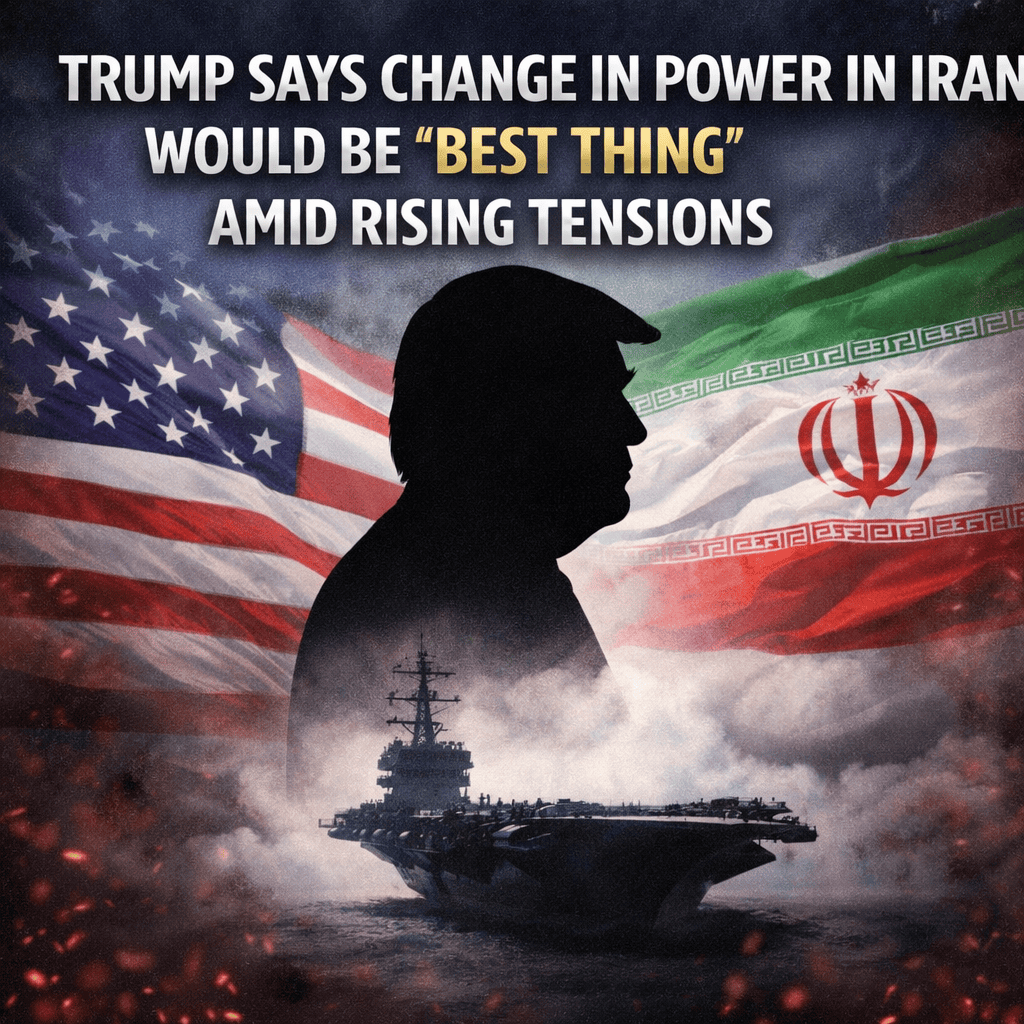
Trump says change in power in Iran would be “the best thing that could happen,” escalating rhetoric at a time when Washington is reinforcing its military footprint in the Middle East and recalibrating its approach toward Tehran.
The comment followed confirmation that a second U.S. aircraft carrier group is being deployed to the region. The USS Gerald R. Ford carrier strike group is expected to bolster American naval presence amid heightened tensions linked to Iran’s regional posture and nuclear activity. The move signals deterrence while leaving room for diplomatic engagement, though the White House’s messaging has grown sharper.
When pressed by reporters, Trump stopped short of formally declaring regime change as U.S. policy. Still, Trump says change in power in Iran would represent a positive development after decades of strained relations between Washington and Tehran. He framed the statement as an observation rather than a direct call for intervention, but the language marked a departure from carefully calibrated diplomatic phrasing.
The remarks come as nuclear diplomacy remains fragile. Talks aimed at limiting Iran’s nuclear capabilities face recurring setbacks over enrichment levels, inspection access and sanctions relief. By reinforcing military assets in the region while discussing leadership change in Tehran, Washington appears to be operating on dual tracks: diplomatic engagement paired with visible deterrence.
Regional allies are closely monitoring the shift in tone. Israel has continued to advocate for stronger measures against Iran’s nuclear infrastructure rather than temporary freezes. Gulf states, meanwhile, are balancing deterrence with economic stability concerns, particularly regarding energy markets that remain sensitive to geopolitical signals.
Trump says change in power in Iran at a moment when Iran itself faces economic strain and sporadic internal dissent. While there is no official U.S. strategy aimed at engineered political transition, public statements suggesting preference for leadership change inevitably influence perceptions inside and outside Iran.
From a strategic standpoint, rhetoric about regime change carries implications beyond diplomacy. Markets react to escalation signals. Regional actors reassess alliances. Tehran evaluates whether U.S. intentions are defensive or transformative. When language intensifies without corresponding policy clarity, ambiguity can either deter or provoke—depending on interpretation.
Two structural considerations now matter:
• Clear distinction between stated preference and formal policy direction
• Coordinated messaging with regional allies to avoid fragmented deterrence signals
Speculation: If the administration continues to blend military reinforcement with assertive political language, negotiations may narrow rather than expand. Alternatively, the posture could be designed to strengthen Washington’s leverage before any substantive diplomatic breakthrough.
For now, Trump says change in power in Iran as U.S. naval assets reposition and diplomatic channels remain uncertain. Whether the statement becomes a defining policy marker or remains rhetorical positioning will depend on how Washington aligns military posture, negotiation strategy, and regional coordination in the weeks ahead.