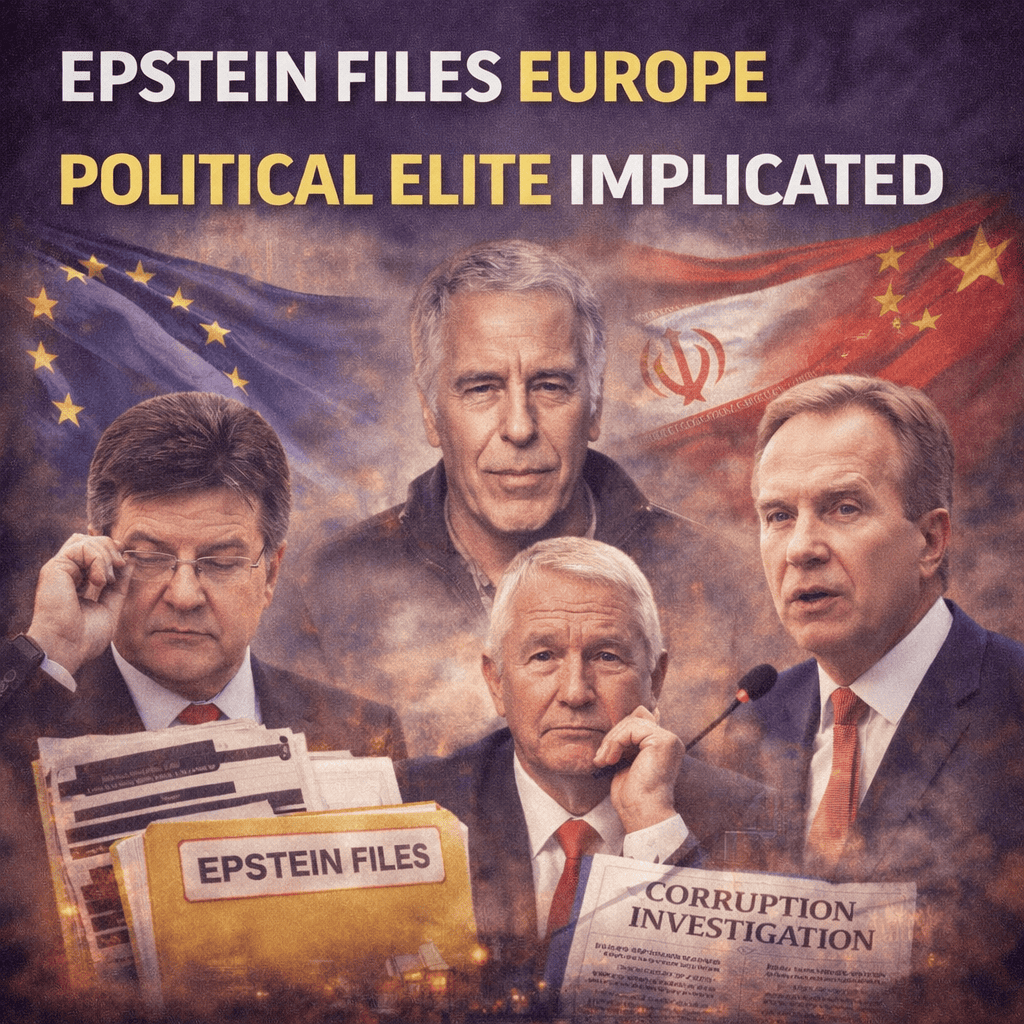
The fallout from newly unsealed U.S. court documents continues to spread across Europe, as the Epstein files Europe political elite implicated more senior European officials in a widening scandal. With over 3 million documents now public, references to key European figures have prompted resignations, criminal investigations, and a reckoning over influence networks tied to the late sex offender Jeffrey Epstein.
In Slovakia, former foreign minister and EU envoy Miroslav Lajčák stepped down from his current role after being linked to Epstein through frequent email exchanges. While there’s no evidence of criminal behavior, the political pressure was immediate. Lajčák’s inclusion in Epstein’s digital correspondence has sparked debates about proximity to power and accountability standards.
Norway’s political scene was also jolted. Authorities have opened a criminal corruption probe into Thorbjørn Jagland, former prime minister and former head of the Nobel Peace Prize committee. Prosecutors are now seeking to remove his diplomatic immunity to investigate alleged financial benefits and unexplained trips tied to Epstein’s social network. Jagland has denied wrongdoing but faces mounting political and legal scrutiny.
Another prominent name in the files is Børge Brende, president of the World Economic Forum and former Norwegian foreign minister. Emails suggest Brende interacted with Epstein multiple times between 2018 and 2019. Brende insists he was unaware of Epstein’s criminal background, but opposition politicians are calling for an inquiry into his judgment and conduct.
While some figures are facing direct consequences, others appear in the documents with only tenuous or third-party mentions. French President Emmanuel Macron appears hundreds of times in the data set, but almost all references are indirect, mentioning him in conversations or documents without any direct links to Epstein. French officials have pushed back on online speculation, emphasizing that name-dropping in emails doesn’t constitute evidence of wrongdoing.
The Epstein files Europe political elite implicated a range of public figures without asserting criminal guilt. Still, the revelations raise questions about vetting, political access, and international diplomacy. The public backlash is fueled not just by potential misconduct but by how many elite institutions and individuals failed to distance themselves from Epstein even after his 2008 conviction.
In Parliament across the continent—from London to Brussels—calls are growing for full reviews of ambassadorial appointments, foreign influence protocols, and transparency laws governing officials’ personal networks.
This isn’t just about Epstein. The core issue is the durability of political gatekeeping systems and how elite circles handle moral risk. As new names surface, Europe faces pressure to reform its disclosure standards and ensure that power is not shielded by ambiguity.