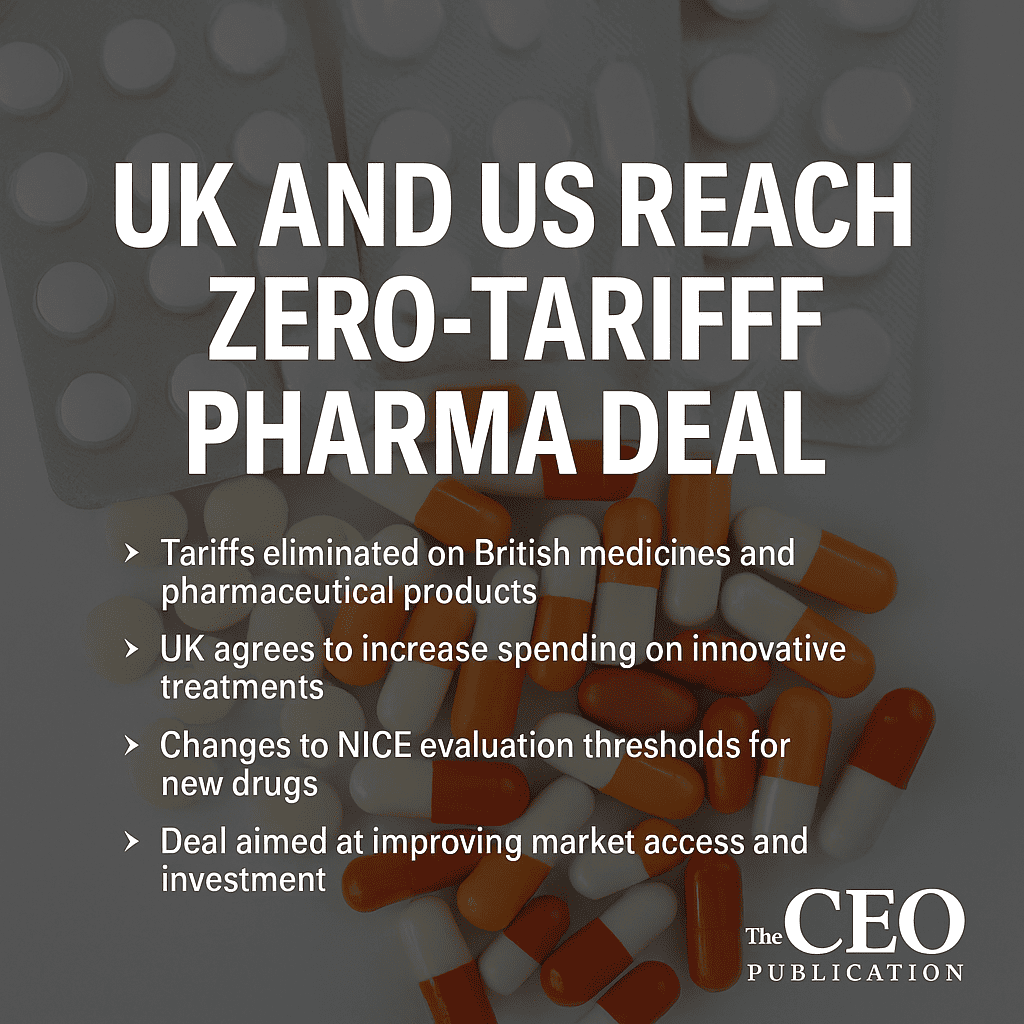
The UK-US zero-tariff pharma deal has formally ended a prolonged period of trade tension, opening tariff-free access for British medicines, pharmaceutical ingredients, and medical devices entering the American market. The agreement prevents the United States from imposing steep duties — previously discussed at 25% to 100% — that would have hit one of the UK’s most valuable export sectors.
Under the arrangement, the UK-US zero-tariff pharma deal requires the UK to overhaul parts of its drug-pricing system, lift barriers to the uptake of high-cost therapies, and adjust long-standing cost-effectiveness thresholds. NICE will begin applying a more flexible evaluation range, allowing innovative treatments — especially oncology, rare-disease drugs, and advanced biologics — to reach patients faster. This shift aligns with US arguments that the UK’s tightly controlled pricing framework suppressed global price signals and slowed market adoption of breakthrough therapies.
The UK-US zero-tariff pharma deal also commits the UK to a roughly 25% increase in spending on innovative medicines, marking the most significant adjustment to NHS drug budgets in over two decades. This change follows repeated warnings from pharmaceutical companies that the UK’s strict rebate system, unpredictable pricing policies, and slow market access were deterring investment. AstraZeneca’s decision to pause expansion plans became a focal point of industry frustration, reinforcing pressure on officials to secure a more stable environment for research pipelines and commercial deployment.
For Washington, the agreement removes the need for further investigations into UK pricing practices during President Trump’s term, reducing the likelihood of new trade disputes targeting pharmaceuticals. For London, zero-tariff access protects billions of pounds in exports to the US—its largest destination for life-sciences goods—and strengthens the UK’s claim to remain a global innovation hub.
Critics say the reforms embedded in the UK-US zero-tariff pharma deal risk increasing pressure on the NHS. Higher drug prices without corresponding long-term funding may force difficult trade-offs in other areas of care. Concerns also extend to generic medicine producers: a system designed to accelerate access to premium drugs could shift commercial incentives away from affordability and exacerbate cost disparities across treatment categories.
Supporters counter that the economic and clinical upside outweighs the risks. Earlier access to cutting-edge therapies could reduce downstream costs for hospital care, improve survival rates, and enhance the UK’s competitiveness in life sciences investment cycles. For exporters, the clarity of a tariff-free market combined with more predictable pricing rules provides a foundation for expanded R&D commitments.
The next test of the UK-US zero-tariff pharma deal will emerge as new cancer treatments, Alzheimer’s medicines, and rare-disease therapies are evaluated under the reformed cost-effectiveness rules—an early indicator of whether the agreement can balance affordability, access, and industry confidence.